

Build the Product Office your organization needs to deliver in an AI-enabled world
Traditional software delivery models were built for stability. But today, customer expectations, market conditions, and AI enablement are changing faster than static plans can respond. IncrementOne helps organizations build the product delivery discipline and learning culture needed to adapt quickly and deliver value continuously.
Product delivery as a foundational capability
Most digital product delivery problems aren’t execution problems – they’re steering problems. The organizational structure and entrenched delivery habits are blocking progress, without being aware. This could look like:
- Leadership does not have a clear, shared view of what work is in progress
- Strategic initiatives stall under the weight of operational “business as usual”
- Priorities are declared, and inconsistently delivered
- Teams stay busy, yet meaningful outcomes arrive slowly – capacity dominates the conversation
- Problems are sensed late, after deadlines slip or trust erodes
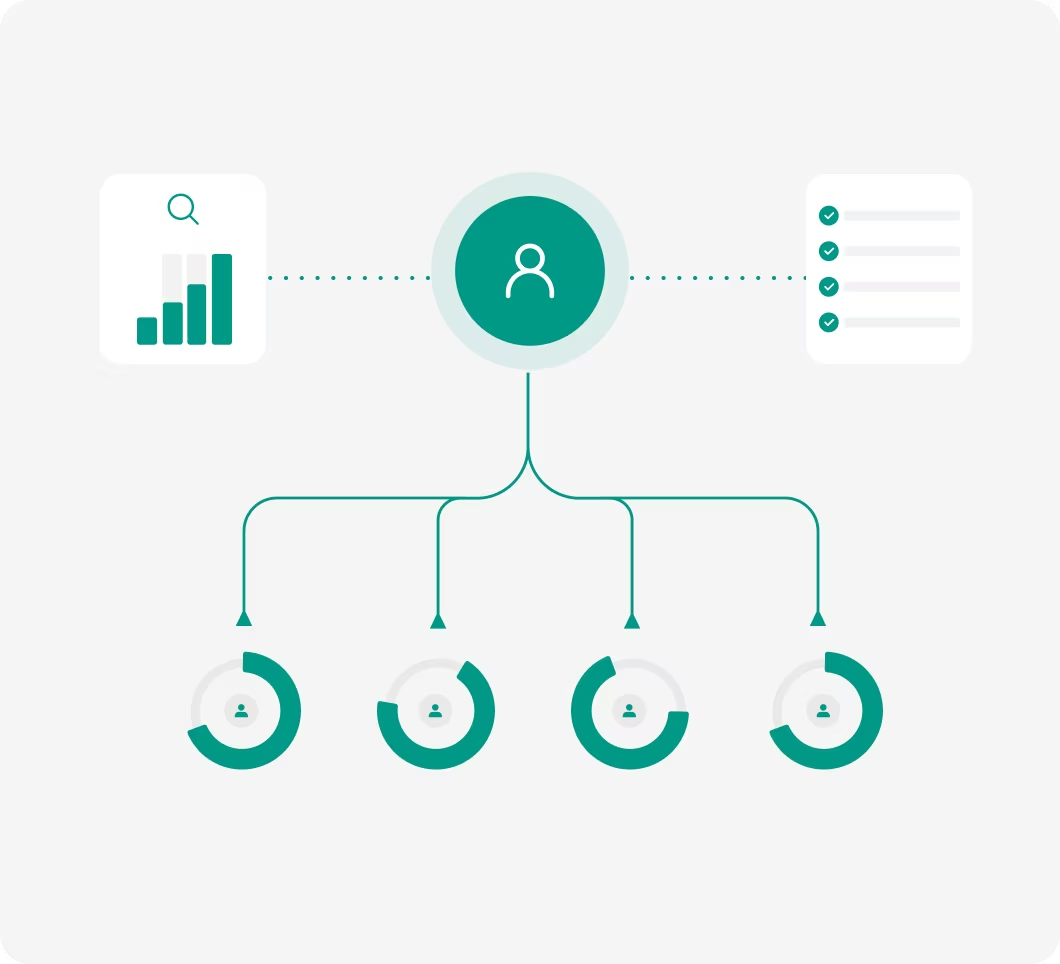
We help you build the leadership and culture needed to support dynamic digital product delivery by working with you on three key capabilities
Our certification is more than a badge. It represents our pledge to:



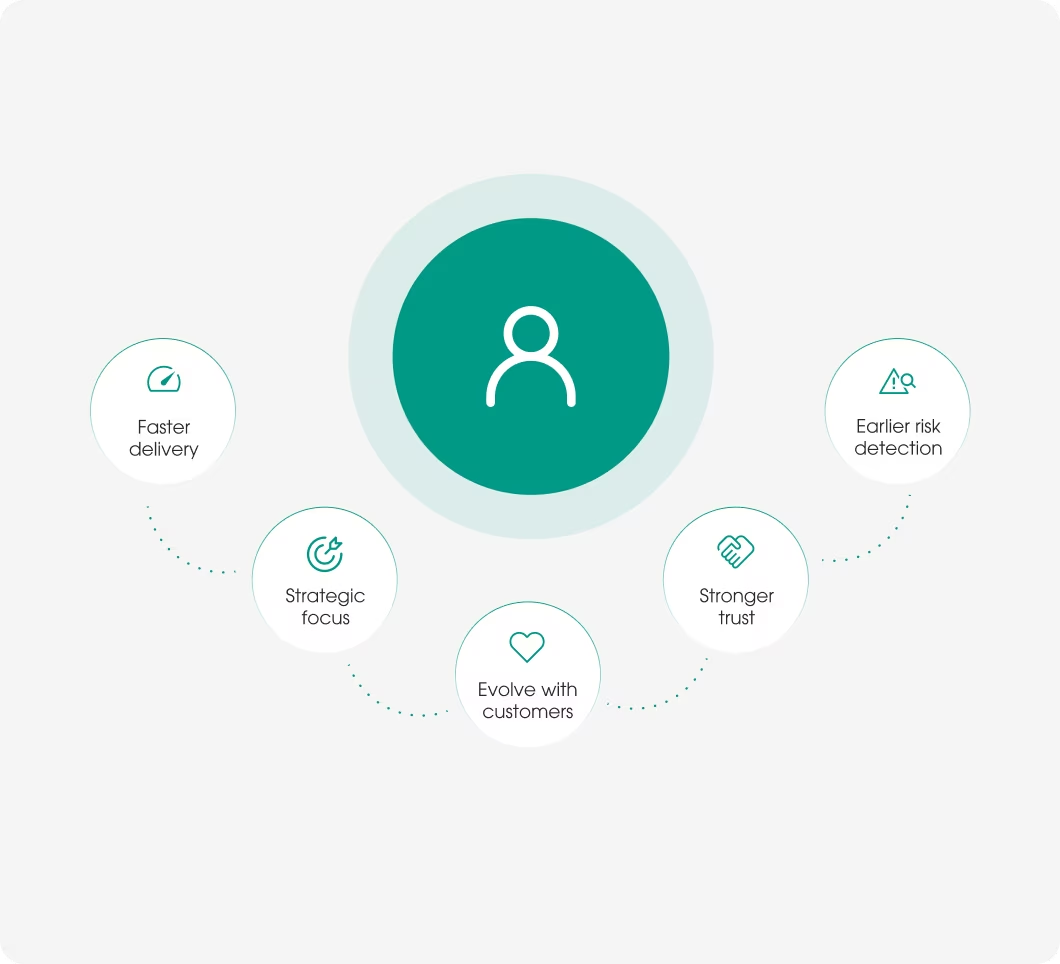
What changes when you get this right?
Traditional delivery relied on abstraction: activity as a proxy for progress, utilization as a proxy for effectiveness, and plans as a substitute for learning.
That worked when markets moved slowly and change was predictable.
Today’s environment is different. AI has disrupted digital product delivery; what worked in the past can no longer keep up with fast-shifting customer expectations. Dependencies that change daily undermine commitments. Competitive advantages are temporary. In this context, abstraction loses its predictive power.
Five areas that shape modern product delivery
Most delivery problems are not execution problems — they are steering problems. Leaders need the visibility, shared language, and decision-making habits to guide work in a fast-changing environment.
Signals
- Priorities are declared but inconsistently delivered
- Teams stay busy, but outcomes arrive slowly
- Leadership lacks a clear view of work in progress
- Risks are discovered late, after trust or timelines are affected
How we help
- Align leaders around product delivery principles
- Create shared visibility into work, constraints, and outcomes
- Shift leadership conversations from activity and dates to outcomes and flow
What changes
- Faster delivery of meaningful delivery increments
- Earlier detection of risk and dependencies
- Stronger trust between leadership and teams
Delivery teams often don't seamlessly align with value delivery. Work moves from team to team, but impactful changes for the customer are hard to deliver.
Signals
- Priorities collide across teams
- Shared services become bottlenecks
- Work gets stuck in approvals, reviews, or governance layers
- Delivery feels slow despite process discipline
How we help
- Define value streams clearly
- Reduce dependencies and conflicting priorities
- Organize teams around outcomes, ownership, and flow
What changes
- Dependencies reduce
- Delivery speed increases
- Ownership becomes clearer
- Strategic priorities translate into delivery
In many organizations, product management has become feature coordination and backlog administration. Strong product management is about deciding what to work on, why it matters, and how value will be measured.
Signals
- Product teams mainly manage requests
- Discovery and execution are mixed together
- Success is measured by shipping, not adoption
- Technical health is treated as an afterthought
How we help
- Clarify product ownership and decision authority
- Separate discovery from execution
- Define measurable value hypotheses
- Plan adoption tracking before development starts
What changes
- Product decisions become clearer
- Teams deliver more predictably
- Adoption improves
- Strategy and execution reinforce each other
Product delivery models have changed how work gets done. Yet without a resilient delivery foundation, AI-enablement is upending product delivery workflows and undermining flow.
Signals
- Ideas enter faster than value exits
- Teams are busy, but customers do not see meaningful change
- Delivery dates are unpredictable
- AI speeds up parts of the system, but new bottlenecks emerge
How we help
- Design delivery around value, not activity
- Manage flow for customer impact and hypothesis validation
- Visualize the whole system to identify delivery constraints
What changes
- Cycle times shorten and stabilize
- Delivery becomes more predictable
- Value reaches customers more frequently
- Leaders can see where value is moving and where it is stuck
Continuous improvement is not simply becoming more efficient. Direction matters. Validating that what is being delivered creates the desired impact (or not), for customers and the business, allows for better decisions.
Signals
- Teams measure success by volume of work completed
- Experimentation feels risky
- Delivery metrics exist, but insight is thin
- Work flows, but learning does not
How we help
- Treat delivery as hypothesis testing
- Create short feedback cycles
- Use workflow visibility to diagnose where ideas stall
- Shift measurement from “Did we ship it?” to “Did it change anything?”
What changes
- Teams adapt faster
- Product decline is detected earlier
- Decisions become more evidence-based
- Learning velocity becomes a competitive advantage

Not only do you get a great team, but you get a genuine team that cares about what the results are and how your needs will bemet throughout the entire process. Continually checking in and helping to identify any areas where we might need to shift delivery to make sure we achieved our results.

Pink Triangle Press
Consulting with IncrementOne has given us a great foundation to build on. Teams better understand what ‘ready’ looks like and how to craft a Definition of Done. Most importantly, they have learned the importance of visualizing empirical data and using it as an input for continuous improvement. As a result, teams have made improvements in many aspects of their delivery processes.

JaneApp
IncrementOne has helped our organization mobilize our strategy throughout all of our teams. Their hands-on program brings everyone up to speed quickly. IncrementOne has helped us reinforce what I call the three As across the organization: alignment, agility and accountability.”

Pink Triangle Press
From an impact perspective, our team has started to implement many of the practices we learned together. IncrementOne has helped our team level up and the training with IncrementOne exceeded our expectations.

Product Management D2L
What a great way to break down how we can identify a root-cause analysis! The instructor was clear with instructions and everything was perfectly timed! In addition lots of time for sharing and questions. So interactive between the Miro board and also group discussions. Loved it. Thank you!

Lululemon
Our teams immediately started putting ideas from the training into practice.

We had some reluctance before. The training created more momentum than we expected.
Leaders were still discussing and evolving the ideas weeks later.
Ready to build your product office?
Organizations that build a strong product delivery foundation adapt faster, detect product decline earlier, and build the cultural resilience to explore their way out of threatened positions. They don't compromise the present at the expense of the future.
Decision velocity and a learning culture provide the advantage. Everything else follows from it.


